What is Impressionism Art Style? A Complete Guide
July 29, 2026 14 min read 2,708 words
Uncover the revolutionary art movement that captured fleeting moments and transformed the way we see light and color.
Explore Impressionism
The Genesis of a Revolution: Understanding Impressionism's Origins
 Photo: Bruno Krajski / Pexels
To truly grasp what is Impressionism art style, one must first understand the historical and cultural cauldron from which it emerged. The mid-19th century in France was a period of immense change, marked by industrialization, urbanization, and a burgeoning middle class. Traditional art institutions, particularly the Salon de Paris, rigidly controlled what was considered acceptable art, favoring historical, mythological, and religious subjects painted with meticulous detail and subdued palettes. Artists who dared to deviate from these norms often faced rejection and ridicule. This rigid environment, however, created fertile ground for rebellion. A group of avant-garde artists, frustrated by the Salon's conservatism and inspired by new scientific theories about light and color, began to meet and share their radical ideas. They were particularly influenced by the invention of photography, which captured instantaneous moments with unprecedented realism, prompting painters to question the very purpose of painting. If a camera could perfectly replicate reality, what was the unique role of the artist? Their answer lay in capturing not just what the eye saw, but how it saw – the fleeting, subjective experience of light, atmosphere, and color. The term 'Impressionism' itself was initially a derogatory label, coined by art critic Louis Leroy after viewing Claude Monet's painting 'Impression, Sunrise' at their first independent exhibition in 1874. Leroy intended it as an insult, implying the works were mere 'impressions' rather than finished paintings. However, the artists embraced the term, turning a criticism into a badge of honor. This exhibition, held outside the official Salon, was a defiant act that signaled a profound shift in the art world. It marked a break from centuries of academic tradition and laid the groundwork for modern art. The artists involved, including Monet, Renoir, Degas, Pissarro, and Morisot, shared a common desire to depict contemporary life and landscapes with a fresh, spontaneous approach. They moved away from the darkened studios of their predecessors, preferring to paint 'en plein air' – outdoors – to directly observe the ever-changing effects of natural light. This direct engagement with their surroundings allowed them to capture the vibrant, ephemeral qualities of the world, challenging viewers to see beauty in the everyday and to appreciate the subjective experience of perception. The social and political upheaval of the time also played a role, fostering a desire for new forms of expression that reflected the dynamism of modern life. This movement wasn't just about painting techniques; it was a philosophical statement about art's purpose and its relationship to reality. For more insights into artistic movements, consider exploring
the broader history of art.
Unpacking the Signature Characteristics of Impressionist Art
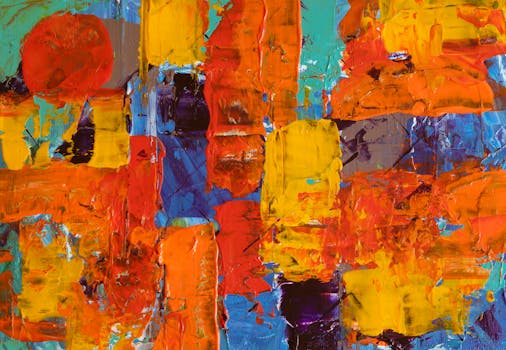 Photo: Steve A Johnson / Pexels
When examining what is Impressionism art style, several distinctive characteristics immediately come to the fore, setting it apart from the artistic traditions that preceded it. The most prominent feature is the *visible brushstroke*. Instead of meticulously blending colors to achieve a smooth, seamless surface, Impressionists applied paint in short, thick, distinct strokes. This technique allowed them to capture the fleeting quality of light and the texture of surfaces, giving their paintings a vibrant, almost shimmering quality. These brushstrokes, often visible to the naked eye, emphasize the artist's hand and the act of painting itself, rather than trying to hide it. Another defining characteristic is the *open composition*. Unlike traditional compositions that often framed subjects centrally and rigidly, Impressionist works often appear to be cropped arbitrarily, as if a snapshot of a larger scene. This informal approach gave a sense of spontaneity and immediacy, suggesting that the viewer was catching a glimpse of a moment in time, rather than a carefully constructed tableau. The influence of Japanese prints, which often featured unusual angles and asymmetrical compositions, can be seen in this aspect. The *emphasis on light* is arguably the most crucial element of Impressionism. Artists were fascinated by how light transformed the appearance of objects and scenes at different times of day and under various atmospheric conditions. They meticulously studied shadows, observing that they were not merely the absence of light but were filled with color, reflecting the surrounding environment. This led to a revolutionary use of color, where they moved away from muted, earthy tones to a palette rich with vibrant, pure colors. They often placed complementary colors side-by-side without mixing them on the palette, allowing the viewer's eye to blend them optically from a distance, creating a greater sense of luminosity and vibrancy. *Subject matter* also underwent a radical shift. Impressionists largely abandoned historical, mythological, and religious narratives in favor of scenes from contemporary, everyday life. They painted landscapes, cityscapes, portraits, and scenes of leisure activities – picnics, dances, boating, and cafes. This focus on the mundane elevated ordinary moments to subjects worthy of artistic exploration, reflecting the changing social fabric of the 19th century. The goal was to capture the *impression* of a scene, rather than a precise, detailed rendering. This subjective approach meant that the artist's individual perception and emotional response to the subject became paramount. The finished work was less about photographic accuracy and more about conveying a sensory experience, a feeling, or a particular moment. This subjective interpretation paved the way for future art movements that further explored personal expression. Collectively, these characteristics represent a radical departure from academic art, marking Impressionism as a pivotal moment in art history and defining its enduring appeal.
Key Figures and Enduring Legacy: The Impact of Impressionism on Art
 Photo: Raúl Sotomayor / Pexels
The question of what is Impressionism art style cannot be fully answered without acknowledging the pivotal artists who shaped its development and the profound legacy it left on the art world. While often seen as a cohesive group, each Impressionist master brought their unique vision and approach to the movement. *Claude Monet* is perhaps the most iconic figure, known for his relentless exploration of light and atmospheric effects, particularly in his series paintings like 'Water Lilies' and 'Rouen Cathedral,' where he painted the same subject repeatedly under different conditions. His dedication to capturing the ephemeral quality of light epitomizes the Impressionist ideal. *Pierre-Auguste Renoir* focused on capturing the joy and exuberance of human interaction and leisure, often depicting vibrant social scenes with soft, feathery brushstrokes and a warm palette. His works, such as 'Bal du moulin de la Galette,' radiate a sense of lively celebration. *Edgar Degas*, while sharing many Impressionist characteristics, had a more precise drawing style and a unique focus on ballet dancers, racehorses, and bathers, often employing unusual angles and compositions influenced by photography and Japanese prints. His ability to capture movement and intimate moments is unparalleled. *Camille Pissarro* was a foundational figure, often considered the 'father' of Impressionism, providing guidance and support to his younger colleagues. He excelled in painting rural and urban landscapes, particularly exploring the changing seasons and light in his scenes of Paris and its surrounding countryside. *Berthe Morisot* and *Mary Cassatt* were two prominent female Impressionists who brought a distinct perspective to the movement, often depicting domestic scenes, motherhood, and the lives of women with sensitivity and insight, challenging the male-dominated art world. The immediate impact of Impressionism was revolutionary. It broke the stranglehold of academic art, opening up possibilities for artistic expression that had been stifled for centuries. By prioritizing subjective perception, light, and contemporary subject matter, it fundamentally redefined the purpose and nature of painting. Its influence quickly spread beyond France, inspiring artists across Europe and America. More importantly, Impressionism served as a crucial bridge to modern art. Its emphasis on visible brushwork, emotional expression, and the artist's individual vision directly paved the way for subsequent movements. *Post-Impressionism*, for instance, emerged directly from Impressionism, with artists like Vincent van Gogh, Paul Cézanne, and Paul Gauguin taking the Impressionist focus on color and light and pushing it further towards greater emotional intensity, symbolic meaning, or structural solidity. Van Gogh's vibrant colors and expressive brushstrokes, Cézanne's analytical approach to form, and Gauguin's symbolic use of color all built upon Impressionist foundations while forging new paths. Even later movements like Fauvism and Cubism can trace elements of their origins back to the radical innovations of the Impressionists. The legacy of Impressionism is not just in the beautiful paintings it produced, but in the profound shift it initiated in the way artists perceived and represented the world, forever changing the course of art history. For those looking to delve deeper into the impact of art movements,
exploring art history resources is highly recommended.
Navigating Impressionism: Tips for Appreciation and Common Misconceptions
 Photo: Beyzaa Yurtkuran / Pexels
Understanding what is Impressionism art style goes beyond mere definitions; it involves learning how to truly appreciate these groundbreaking works and dispelling common myths. Here are some tips for appreciating Impressionist art and common misconceptions to avoid:
**Tips for Appreciating Impressionist Art:**
* **Step Back:** Impressionist paintings are often best viewed from a slight distance. The distinct brushstrokes and juxtaposed colors tend to blend optically when viewed from afar, creating a more luminous and cohesive image. Don't be afraid to move around and find the 'sweet spot' for viewing.
* **Focus on Light and Color:** Pay close attention to how light is rendered in the painting. Notice the colors in the shadows – are they truly black or grey, or do they contain blues, purples, and greens? Observe how the artist uses color to depict different times of day or weather conditions.
* **Consider the Moment:** Remember that Impressionists sought to capture a fleeting moment. Try to imagine the scene as it would have appeared in that specific instant – the movement of water, the rustle of leaves, the quality of sunlight.
* **Embrace the 'Unfinished' Look:** Don't expect photographic realism. The visible brushstrokes and less defined forms are intentional. They convey energy, movement, and the artist's subjective experience, rather than a polished, academic finish.
* **Research the Context:** Knowing a little about the artist's life, the specific location depicted, or the historical context can greatly enhance your appreciation. For example, knowing Monet painted the same haystack dozens of times makes his dedication to light even more profound.
**Common Misconceptions about Impressionism:**
* **Misconception 1: Impressionism is 'Easy' or 'Childish'.** This is a common but incorrect perception. The spontaneity of Impressionist painting was the result of immense skill, keen observation, and often rigorous study of color theory. Achieving that 'effortless' look required mastery.
* **Misconception 2: All Impressionists Painted Exactly Alike.** While they shared core principles, each Impressionist artist had a unique style, preferred subjects, and technical nuances. Comparing Monet's atmospheric landscapes to Degas's precise figure studies quickly reveals their individual artistic voices.
* **Misconception 3: Impressionism Was Universally Loved from the Start.** Far from it! The movement faced significant criticism and ridicule from the art establishment and much of the public initially. It took time for their revolutionary approach to gain acceptance and appreciation.
* **Misconception 4: Impressionism is Just About Pretty Landscapes.** While landscapes are a significant part, Impressionists also depicted portraits, urban scenes, still lifes, and interior domestic moments, demonstrating a broad range of subject matter that reflected modern life.
By approaching Impressionist art with an open mind and an understanding of its unique characteristics, viewers can unlock the profound beauty and revolutionary spirit that defines this iconic art style.