
What is Contemporary Art Definition? Unraveling Modern Creativity
contemporary art definition

What is Contemporary Art Definition? Unraveling Modern Creativity

Dynamic abstract art featuring expressive red brushstrokes, perfect for modern decor.Photo: Landiva Weber / Pexels

What is Contemporary Art Definition? Unraveling Modern Creativity

Dive into the dynamic world of contemporary art and discover its diverse forms, challenging ideas, and cultural impact.

Start Exploring Art

Key Takeaways

  • ✓ Contemporary art generally refers to art produced from the 1970s or 1980s to the present day.
  • ✓ It is characterized by its diversity, often incorporating new media, technologies, and interdisciplinary approaches.
  • ✓ Contemporary art frequently engages with social, political, and cultural issues, prompting dialogue and reflection.
  • ✓ There is no single, universally accepted definition, as its boundaries are constantly being redefined by artists and critics.

How It Works

1
Acknowledge the Fluidity

Understand that contemporary art defies a rigid definition. Its nature is to be current, evolving, and often provocative.

2
Focus on Context and Intent

When encountering a piece, consider the artist's message, the materials used, and the broader social or political context it addresses.

3
Embrace New Media

Be open to art expressed through video, performance, installation, digital platforms, and other non-traditional forms alongside painting and sculpture.

4
Engage in Dialogue

Discussing contemporary art with others, reading critiques, and visiting exhibitions can deepen your understanding and appreciation.

Defining the Undefinable: What is Contemporary Art?
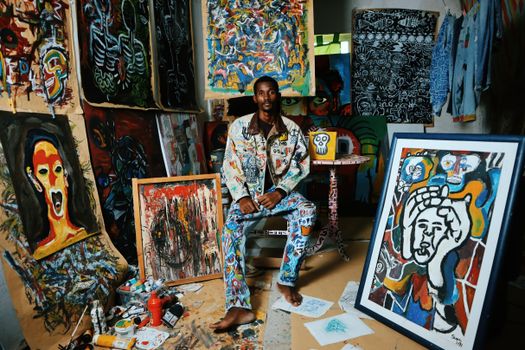
An artist in a creative studio surrounded by colorful paintings in New York City.Photo: Sandro Lopes Art / Pexels
The phrase "what is contemporary art definition" often sparks lively debate, and for good reason. Unlike historical art periods with clear start and end dates, contemporary art is a living, breathing, and constantly morphing entity. Broadly speaking, it refers to art made in our lifetime, or more specifically, from the latter half of the 20th century to the present day. While some art historians mark its beginning around the 1960s with Pop Art and Minimalism, a more common consensus places its origin in the late 1970s or early 1980s, following the movements of Modern Art. This timeframe is crucial because it signifies a departure from the established norms and theories that defined earlier periods. Contemporary art is characterized by its radical diversity, its willingness to experiment with new materials and technologies, and its often intense engagement with the social, political, and cultural landscape of its time. It’s not just about aesthetics; it's about ideas, commentary, and challenging perceptions. One of the most significant aspects of contemporary art is its rejection of a singular, dominant style. Whereas art history can often be traced through a succession of 'isms' – Impressionism, Cubism, Surrealism – contemporary art embraces a pluralistic approach. Artists today are not confined to a particular medium or philosophical framework. They might work across painting, sculpture, video, performance, installation, digital art, sound art, and even bio-art or conceptual art, often blurring the lines between these categories. This eclecticism can be both exhilarating and bewildering for viewers, as it demands an open mind and a willingness to question preconceived notions of what art 'should be.' The art world has become a global village, with artists from every corner of the globe contributing to a rich tapestry of perspectives and practices. This global interconnectedness means that contemporary art is less about a specific geographical style and more about shared human experiences and diverse cultural expressions. Understanding this foundational fluidity is the first step in appreciating the complex and rewarding world of contemporary art. For those interested in the broader history of art, understanding the transition from previous periods is key; you can explore more about the evolution of artistic movements to see how contemporary art emerged.

Key Characteristics and Themes in Contemporary Art
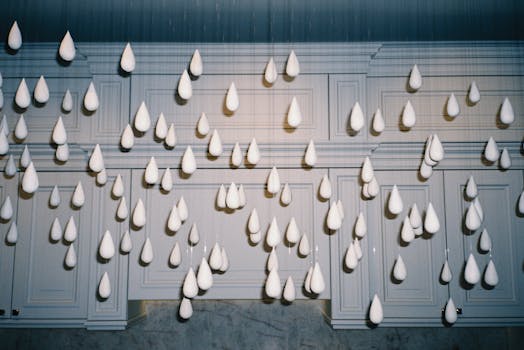
Contemporary art installation with hanging white raindrop shapes indoors.Photo: cottonbro studio / Pexels
To truly grasp what is contemporary art definition, one must delve into its defining characteristics and recurring themes. First and foremost is its strong emphasis on conceptualism. While skill and aesthetics remain important, the idea or message behind a work often takes precedence. This means that a piece might not be immediately 'beautiful' in a traditional sense, but its power lies in the thoughts, questions, or provocations it instigates. Artists frequently use their work to explore complex ideas such as identity (gender, race, sexuality), globalization, environmental concerns, technology's impact, consumerism, and historical memory. Another hallmark is the embrace of new media and technology. From video installations and digital projections to virtual reality experiences and interactive art, contemporary artists are at the forefront of integrating technological advancements into their creative practice. This not only expands the possibilities of artistic expression but also reflects the increasingly digital nature of our own lives. Performance art, which involves the artist's body and actions as the primary medium, also gained significant traction in the contemporary era, challenging the traditional object-centric view of art. Think of Marina Abramović's endurance pieces or the provocative works of artists who engage directly with their audiences. Site-specificity and installation art are further distinguishing features. Many contemporary works are designed for a particular location, transforming the space and creating an immersive experience for the viewer. This moves art beyond the conventional gallery wall, making the environment itself an integral part of the artwork. Furthermore, contemporary art is often participatory, inviting viewers to interact with the piece, either physically or intellectually, thereby becoming co-creators of its meaning. This shift from passive observation to active engagement is a crucial aspect of its revolutionary spirit. The democratizing effect of social media and online platforms has also played a significant role, allowing artists to reach wider audiences and engage in global dialogues outside traditional institutional structures. This constant push against boundaries and conventions is what keeps contemporary art vibrant and relevant to our ever-changing world.

Major Movements and Influences Shaping Contemporary Art Today

A weathered poster on brick wall reveals urban decay, depicting a smiling woman.Photo: Brett Sayles / Pexels
While contemporary art resists neat categorization into distinct 'movements' like its predecessors, several influential trends and groups of artists have significantly shaped its trajectory and help clarify what is contemporary art definition. Postmodernism, which emerged in the mid-to-late 20th century, laid much of the theoretical groundwork, questioning grand narratives, embracing irony, and blurring the lines between high and low culture. This philosophical shift allowed for the radical experimentation and pluralism we see today. One significant trend is the rise of identity politics in art. Artists from marginalized communities – women, people of color, LGBTQ+ individuals – have used their work to challenge dominant narratives, assert their experiences, and critique social injustices. This has led to a richer, more inclusive art world that reflects the diverse tapestry of human experience. Examples include the powerful photography of Carrie Mae Weems, the textile works of Faith Ringgold, or the activist art of Gran Fury during the AIDS crisis. Their work forces viewers to confront uncomfortable truths and reconsider their own biases. Another powerful influence comes from the ongoing dialogue between art and science. Bio-art, for instance, uses biological materials, living tissues, and scientific processes as its medium, raising ethical questions about life, creation, and human intervention. Artists like Eduardo Kac, with his 'GFP Bunny,' have pushed the boundaries of what art can be, entering realms traditionally reserved for scientific research. Similarly, artists are engaging with data visualization, artificial intelligence, and virtual reality to create new forms of expression that reflect our technologically saturated world. The art market itself has also undergone significant transformation, with a globalized network of galleries, art fairs, and biennials fostering international exchange and collaboration, further solidifying the interconnected nature of contemporary artistic practice. These platforms allow for a rapid dissemination of ideas and a cross-pollination of styles and concepts. To fully appreciate these shifts, one might consider exploring how art history influences modern trends and practices.

Navigating the Contemporary Art World: Tips and Common Misconceptions
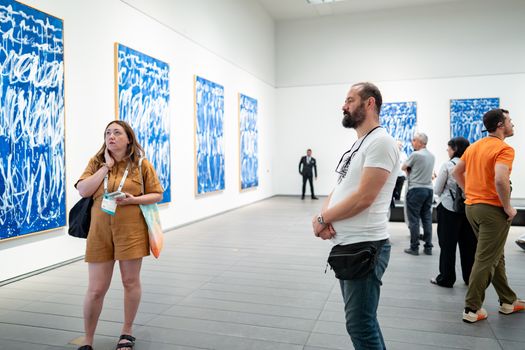
Visitors in an art gallery engaging with blue abstract artworks. Captured indoors with contemporary art, diverse visitors enhancing the scene.Photo: This And No Internet 25 / Pexels
Engaging with contemporary art can be a deeply rewarding experience, but it often comes with its own set of challenges and misconceptions. Here are some tips for navigating this vibrant world and debunking common myths: **Tips for Engagement:** * **Be Open-Minded:** Approach contemporary art without rigid expectations. It often aims to challenge, provoke, or make you think, rather than simply please the eye. * **Read the Wall Text:** Galleries and museums provide crucial context. Reading about the artist's intent, materials, and background can unlock a deeper understanding of the work. * **Ask Questions:** Don't be afraid to wonder, "Why is this art?" or "What does this mean?" These questions are part of the experience. Engaging with gallery staff or fellow viewers can lead to insightful discussions. * **Visit Diverse Venues:** Explore not just major museums, but also smaller galleries, artist-run spaces, and public art installations. This offers a broader perspective on current artistic practices. * **Follow Artists and Critics:** Social media and online publications are excellent resources for staying current with new works, exhibitions, and critical discourse. **Common Misconceptions:** * **"My child could do that."** While some contemporary art might appear simple, it often carries layers of conceptual depth, historical references, and intentional decisions that belie its surface appearance. The execution might be simple, but the idea is usually complex. * **"It's just a joke/scam."** While some art can be humorous or subversive, it rarely lacks serious intent. The art market's economics are complex, but the art itself is typically driven by genuine artistic inquiry. * **"It's only for the elite."** Contemporary art is increasingly accessible, with many public programs, free exhibitions, and digital platforms. Its themes often resonate with everyday experiences. * **"There's no skill involved."** Many contemporary artists possess immense technical skill, even if they choose to subvert traditional craftsmanship or use unconventional materials and methods. Their 'skill' might lie in their conceptual rigor or their innovative use of technology. By shedding these misconceptions and adopting an inquisitive mindset, anyone can find profound meaning and enjoyment in the rich and varied landscape of contemporary art.

Comparison

FeatureContemporary ArtModern Art (Pre-1970s)Classical Art (Pre-19th C)
Time Period1970s/80s - Present1860s - 1970sAncient to Mid-19th Century
Key FocusConcept, Identity, Social IssuesInnovation, Abstraction, FormalismBeauty, Idealism, Narrative
Dominant MediaMixed-media, Digital, Performance, InstallationPainting, Sculpture (traditional forms)Painting, Sculpture (classical forms)
Viewer RoleParticipatory, InterpretiveObservational, ReflectiveAppreciative, Educational

What Our Readers Say

5 ★★★★★

"This article finally helped me understand what is contemporary art definition! I used to feel intimidated, but now I appreciate the ideas behind the pieces so much more."

5 ★★★★★

"As an aspiring artist, this deep dive into contemporary art characteristics was incredibly insightful. It validated my own experimental approach and opened my eyes to new possibilities."

5 ★★★★★

"The distinction between contemporary and modern art was clearly articulated, providing a solid framework for understanding. My students will definitely benefit from this perspective."

4 ★★★★☆

"While comprehensive, some of the conceptual art examples could have been expanded upon. Still, a very valuable resource for demystifying this often-complex subject."

5 ★★★★★

"I always thought contemporary art was 'weird,' but this article explained the 'why' behind it. It's not just random; it's a commentary on our world, which is truly fascinating."

Frequently Asked Questions

What is the primary difference between contemporary art and modern art?
The primary difference lies in their time periods and underlying philosophies. Modern art typically spans from the 1860s to the 1970s, focusing on breaking from traditional forms and exploring abstraction. Contemporary art, from the 1970s/80s to the present, is more focused on conceptual ideas, social commentary, new media, and a pluralistic approach that resists a single style.
Is contemporary art only found in museums and galleries?
No, contemporary art extends far beyond traditional institutional spaces. You can find it in public art installations, street art, digital platforms, performance spaces, and even within scientific research or community projects. Its nature is to be integrated into various aspects of contemporary life.
How can I start appreciating contemporary art if I find it confusing?
Start by being open-minded and curious. Don't feel pressured to 'like' every piece, but try to understand the artist's intent and the context. Read the accompanying information, visit exhibitions with an open dialogue, and explore different types of contemporary art to find what resonates with you. Your personal connection to the ideas is key.
Does contemporary art have any monetary value, or is it just conceptual?
Yes, contemporary art can have significant monetary value. The art market for contemporary works is global and highly active, with pieces by renowned artists fetching millions at auction. Its value is determined by factors like the artist's reputation, the work's historical significance, its uniqueness, and market demand, not solely its conceptual nature.
How does contemporary art address global issues?
Contemporary art frequently engages with global issues such as climate change, globalization, migration, human rights, and technological ethics. Artists use their work as a platform for social commentary, raising awareness, fostering dialogue, and sometimes even inspiring activism, reflecting the interconnectedness of our world.
Who are some notable contemporary artists I should know?
Some highly influential contemporary artists include Jeff Koons, Cindy Sherman, Ai Weiwei, Yayoi Kusama, Marina Abramović, Damien Hirst, Kara Walker, and Banksy, among many others. Their work often challenges conventions and provokes thought, making them key figures in defining the contemporary art landscape.
Is there a 'right' way to interpret contemporary art?
There isn't a single 'right' way to interpret contemporary art. Its strength often lies in its openness to multiple interpretations. While understanding the artist's intent and context is valuable, your personal response and the meaning you derive are also valid parts of the experience. It encourages individual engagement and critical thinking.
What is the future direction of contemporary art?
The future of contemporary art is likely to be even more interdisciplinary, embracing advancements in AI, virtual and augmented reality, bio-technology, and climate-responsive practices. It will continue to reflect and comment on global challenges, push conceptual boundaries, and foster greater inclusivity and diversity in artistic voices and narratives.

Unlock a deeper appreciation for the art of our time. By understanding what is contemporary art definition, you gain a powerful lens through which to view and interpret the world around you. Start your journey of discovery today and engage with the vibrant, challenging, and ever-evolving landscape of contemporary creativity.

Topics: contemporary art definitionmodern art explainedpost-1970s artart movements todayunderstanding contemporary art
Leo List
Brampton weed
Adultwork