Unpacking the Meaning of Abstract Expressionism
August 16, 2026 18 min read 3,562 words
Explore the revolutionary art movement that redefined painting and expressed deep human emotion after WWII.
Discover Its Legacy
The Genesis and Meaning of Abstract Expressionism: A Post-War Reckoning
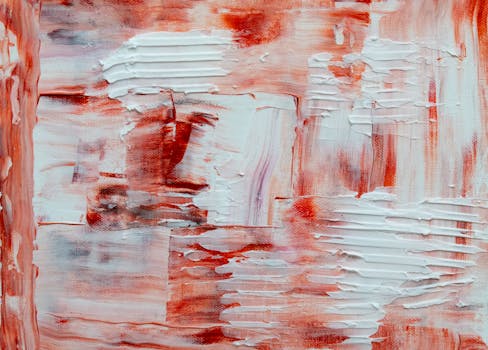 Photo: Steve A Johnson / Pexels
To truly grasp the meaning of Abstract Expressionism, one must first immerse themselves in the tumultuous era of its birth. Emerging in the crucible of post-World War II America, particularly in New York City, this art movement was far more than just a new style of painting; it was a profound cultural and psychological response to unprecedented global upheaval. The devastation of war, the horrors of the Holocaust, and the looming threat of the atomic age left humanity grappling with existential questions about life, meaning, and the very nature of existence. European artistic centers, once vibrant, were shattered, and many leading artists and intellectuals sought refuge in the United States, inadvertently transforming New York into the new epicenter of the art world.
Against this backdrop of trauma and uncertainty, Abstract Expressionism offered a radical departure from previous artistic conventions. Artists felt that traditional forms of representation were insufficient to convey the depth of human experience and the raw emotional landscape of the mid-20th century. Realism felt trivial, and even earlier forms of abstraction seemed too cerebral or decorative. What was needed, they believed, was an art that was direct, visceral, and deeply personal, capable of expressing the subconscious mind and universal human truths without relying on recognizable subjects. This quest for authenticity and emotional immediacy became central to the meaning of Abstract Expressionism. It was a rebellion against convention, a yearning for freedom, and a desperate attempt to find meaning in a seemingly meaningless world. The artists, often deeply influenced by Surrealism's emphasis on automatism and the unconscious, and by Carl Jung's theories of archetypes and the collective unconscious, sought to tap into primal energies and universal symbols through their art. They believed that by stripping away objective reality, they could access a deeper, more profound truth within themselves and, by extension, within humanity. This inward turn was not an act of isolation but an attempt to connect with fundamental human experiences that transcended national borders or specific historical events. The canvas became an arena for action, a psychological battlefield where the artist confronted their inner world. This intense personal engagement, coupled with a desire to create something entirely new and distinctly American, propelled the movement forward. It was a declaration of artistic independence for a nation coming into its own on the global stage, asserting its cultural dominance through a revolutionary visual language. The intellectual and philosophical underpinnings were as complex as the paintings themselves, drawing on everything from existential philosophy to Native American art, all filtered through the unique perspectives of a diverse group of artists struggling to make sense of their world and their place within it. The raw emotion, the spontaneous gestures, and the monumental scale of the works were all part of this audacious effort to create an art that was as expansive and complex as the human spirit itself. It was a quest for an art that was not just seen, but felt, an art that resonated with the deepest parts of the human psyche, offering a form of catharsis and profound insight in a world desperate for both. This radical shift in artistic purpose and methodology fundamentally reshaped the trajectory of modern art, establishing a legacy that continues to resonate today. For more on the broader context of modern art, explore
the history of modern art movements.
Diverse Approaches to Expression: Action Painting vs. Color Field
 Photo: Diana ✨ / Pexels
While often grouped under the single umbrella of Abstract Expressionism, the movement was far from monolithic, encompassing a rich diversity of artistic approaches that nonetheless shared common philosophical roots. Understanding these distinct styles is crucial to fully appreciating the nuanced meaning of Abstract Expressionism. The two most prominent veins within the movement are 'Action Painting' and 'Color Field Painting,' each offering a unique pathway to emotional and spiritual expression.
Action Painting, perhaps most famously embodied by Jackson Pollock, is characterized by its dynamic, gestural, and often chaotic energy. For artists like Pollock, Willem de Kooning, and Franz Kline, the act of painting itself was paramount. The canvas was not merely a surface to be filled, but an arena for performance, a record of the artist's physical and psychological engagement. Pollock's revolutionary 'drip' technique, where he poured, dribbled, and flung paint onto a canvas laid on the floor, transformed painting into a full-body experience. The resulting works were not composed in the traditional sense; rather, they were the direct imprints of the artist's subconscious impulses and physical movements. The meaning here lies not in deciphering recognizable forms, but in experiencing the raw energy, the tension, and the release embedded in the brushstrokes (or lack thereof). These paintings are testaments to spontaneity, improvisation, and the direct channeling of inner turmoil and vitality. They speak of an unmediated connection between the artist's psyche and the material world, a struggle and triumph enacted on a grand scale.
In stark contrast, Color Field Painting, championed by artists such as Mark Rothko, Barnett Newman, and Clyfford Still, offered a more contemplative and transcendental experience. While still abstract and deeply personal, these artists moved away from the frenetic energy of action painting towards large, expansive fields of color designed to evoke profound emotional and spiritual states. Rothko's iconic rectangular blocks of color, often softly blurred at the edges, are meant to be experienced up close, enveloping the viewer in their luminous depths. The meaning here is not about the artist's struggle or gesture, but about the contemplative power of pure color and form to elicit a sublime, almost religious experience. These artists aimed to strip away all narrative and illustrative elements, focusing instead on the pure impact of color to communicate universal emotions like joy, sorrow, awe, or tragedy. The monumental scale of these works is crucial; they are designed to overwhelm the viewer, to create an immersive environment that transcends the everyday and invites deep introspection. Barnett Newman's 'zip' paintings, with their vertical lines bisecting vast color fields, similarly sought to create a sense of the sublime, of unity, and of the human presence within an infinite space. Both Action Painting and Color Field Painting, despite their stylistic differences, shared a common goal: to create an art that was deeply meaningful, emotionally resonant, and capable of addressing fundamental human concerns in a post-war world. They redefined the relationship between the artist, the canvas, and the viewer, pushing the boundaries of what art could be and what it could communicate beyond mere representation.
Key Artists and Their Contributions to the Meaning of Abstract Expressionism
 Photo: Tim Mossholder / Pexels
The meaning of Abstract Expressionism is inextricably linked to the groundbreaking artists who defined its parameters and pushed its boundaries. Their individual struggles, innovations, and philosophical stances collectively forged one of the most influential art movements of the 20th century. Understanding their unique contributions is essential to appreciating the full scope of this complex artistic phenomenon.
**Jackson Pollock (1912-1956)** is undeniably the most iconic figure of Action Painting, and perhaps the entire movement. His revolutionary 'drip' technique, where he poured, splattered, and flung paint onto canvases laid on the floor, transformed the act of painting into a visceral, almost ritualistic performance. Pollock's work was a direct manifestation of his subconscious, a raw, unmediated expression of his inner turmoil and energy. His large-scale, all-over compositions obliterate traditional notions of focal points and perspective, immersing the viewer in a dense, intricate web of lines and colors. The meaning in Pollock's work lies in the process itself, the visible record of his existential struggle and the dynamic flow of creative energy. He famously stated, "When I am in my painting, I'm not aware of what I'm doing. It is only after a sort of 'get acquainted' period that I see what I have been about." This encapsulates the essence of his contribution: an art that was deeply personal yet universally resonant, born from instinct rather than intellect.
**Willem de Kooning (1904-1997)**, another titan of Action Painting, is known for his energetic, aggressive brushstrokes and often unsettling figures, particularly his 'Woman' series. Unlike Pollock, de Kooning never fully abandoned figuration, instead distorting and fragmenting the human form to convey raw emotion and an almost brutal sensuality. His works are characterized by a relentless struggle between abstraction and representation, a constant push and pull that mirrors the anxieties of the modern human condition. De Kooning's paintings are a testament to the artist's ongoing battle with the canvas, a process of building up and tearing down, revealing the layers of his psychological landscape. His work adds another dimension to the meaning of Abstract Expressionism, demonstrating that emotional intensity could be achieved even with echoes of the human figure.
**Mark Rothko (1903-1970)** stands as a towering figure of Color Field Painting. His large, luminous canvases featuring soft-edged, rectangular blocks of color are designed to evoke profound spiritual and emotional experiences. Rothko believed that art should be a direct encounter with universal human emotions – tragedy, ecstasy, doom – stripped of all narrative. He intended his paintings to be viewed up close, where their subtle gradations of color and light could envelop the viewer, creating an intimate, almost meditative space. The meaning in Rothko's work is not found in intellectual analysis, but in the purely sensory and emotional resonance of color. He sought to create a sublime experience, a direct communion with the viewer's inner self. His contribution shifted the focus of abstraction from dynamic gesture to contemplative immersion.
**Barnett Newman (1905-1970)**, another key Color Field artist, sought the sublime through vast, monochromatic fields of color punctuated by thin vertical lines he called 'zips.' These zips, often painted in contrasting colors, were intended to break the flatness of the field, creating a sense of scale, presence, and even a metaphorical representation of the human figure standing against an infinite background. Newman's work is deeply philosophical, grappling with themes of creation, existence, and the human desire for meaning. His monumental scale and minimalist forms aimed to create a direct, unmediated encounter with the viewer, bypassing intellectual interpretation to evoke a primal, awe-inspiring experience. His famous phrase, "The first man was an artist," speaks to his belief in art as a fundamental human urge to create and understand.
Other significant figures like **Clyfford Still (1904-1980)**, with his jagged, geological forms and thick impasto, and **Franz Kline (1910-1962)**, known for his powerful, black-and-white calligraphic strokes, further enriched the movement's diverse expressions. Each artist, in their unique way, contributed to the multifaceted meaning of Abstract Expressionism, collectively forging an art form that was deeply personal yet universally resonant, forever changing the trajectory of modern art and placing American art firmly on the global stage. For further exploration of these artists and their contemporaries, consider visiting
major art museums with abstract collections.
The Enduring Legacy and Impact of Abstract Expressionism on Modern Art
The meaning of Abstract Expressionism extends far beyond its initial flourishing in the mid-20th century; its legacy profoundly reshaped the trajectory of modern art and continues to influence contemporary practices. This movement was not merely a stylistic trend; it was a fundamental paradigm shift that redefined the purpose, process, and perception of art, particularly in the Western world. Its impact can be seen in several key areas:
Firstly, Abstract Expressionism firmly established New York City as the new global capital of the art world, effectively ending Paris's centuries-long dominance. This shift reflected America's ascendance as a cultural and economic superpower post-WWII, giving rise to a distinctly American artistic identity that was bold, expansive, and unapologetically individualistic. This cultural supremacy had lasting geopolitical implications, positioning American art at the forefront of international discourse.
Secondly, the movement radically expanded the definition of painting itself. By emphasizing the process, the gesture, and the emotional expression over representational accuracy, Abstract Expressionism liberated artists from traditional constraints. It legitimized the idea that a painting could be about the act of painting, about the artist's inner state, or about the raw material of paint itself. This opened the floodgates for subsequent movements like Minimalism, Conceptual Art, and Performance Art, all of which directly or indirectly built upon the Abstract Expressionists' dismantling of conventional artistic boundaries. The idea that art could be non-representational yet deeply meaningful became a cornerstone of post-war aesthetics.
Thirdly, Abstract Expressionism championed the artist as an individual hero, a lone genius grappling with profound universal truths. This romanticized view of the artist, often seen as a tormented figure channeling deep emotions, became a powerful archetype that resonated culturally. It elevated the artist's personal experience and psychological landscape to the forefront of artistic inquiry, influencing how artists approached their craft and how the public perceived their role in society. The emphasis on individual expression became a hallmark of artistic freedom that continues to be celebrated.
Fourthly, the monumental scale often employed by Abstract Expressionists, particularly in Color Field paintings, transformed the viewer's experience. These large canvases were designed to be immersive, to envelop the spectator and create a direct, almost spiritual communion between the artwork and the individual. This move towards experiential art paved the way for later large-scale installations and immersive environments that seek to engage the viewer on a visceral level rather than just an intellectual one.
Finally, the movement's philosophical underpinnings—drawing from existentialism, Freudian psychology, and Jungian archetypes—infused art with a new intellectual gravitas. It encouraged viewers to look beyond the surface, to seek deeper meanings, and to engage with art on an emotional and psychological level. This intellectual depth ensured that Abstract Expressionism was not just a visual novelty but a profound cultural statement. While subsequent movements like Pop Art reacted against its perceived seriousness and elitism, they did so in dialogue with, and often in direct response to, the legacy of Abstract Expressionism. Its influence is still visible in contemporary abstract art, in the exploration of material properties, and in the continued quest for authenticity and emotional power in artistic expression. The foundational shifts it initiated continue to shape our understanding of what art can be, how it functions, and its enduring power to reflect and influence the human condition.
**Tips for Deepening Your Appreciation of Abstract Expressionism:**
* **Visit in Person:** Experience the scale and texture of these works firsthand. Photos rarely do them justice.
* **Read Artist Statements:** Many Abstract Expressionists wrote extensively about their intentions, offering invaluable insights.
* **Embrace Emotion Over Intellect:** Allow the colors and gestures to affect you emotionally before trying to analyze them.
* **Consider the Context:** Remember the post-WWII anxieties that fueled these artists' desires for profound expression.
* **Don't Search for Objects:** Resist the urge to find recognizable forms; the meaning is in the abstraction itself.
* **Explore Different Sub-movements:** Understand the distinctions between Action Painting and Color Field to appreciate the diversity.
**Common Misconceptions to Avoid:**
* **"Anyone could do that":** While seemingly spontaneous, these works are the result of years of artistic training, experimentation, and profound intention.
* **"It's just random splatters":** Every mark, even in Action Painting, is part of a deliberate, albeit subconscious, process of creation.
* **"It has no meaning":** On the contrary, Abstract Expressionism is intensely meaningful, focusing on universal human emotions and existential questions rather than literal narratives.
* **"All abstract art is Abstract Expressionism":** While a foundational abstract movement, it's distinct from Cubism, Suprematism, Minimalism, etc.
* **"It's purely American":** While born in New York, it drew heavily on European influences and had international resonance.